
Why Foot and Hand Strength Matters in Yoga ~ Tree of Life Yoga Northants
Why We’ve Been Working With the Feet and Hands in Class Recently
Over the past few weeks in class, we’ve been spending more time than usual paying attention to something small but incredibly important: the feet and the hands.
You might have noticed us lifting the toes in standing postures, pressing more deliberately through the palms in Cat/ Cow, or imagining resistance through the feet in low lunges and Lizard. These aren’t random additions. They’re part of something quite traditional in yoga called Bandha practice.
And at this time of year, just after the Spring Equinox, when energy begins to rise again, it’s exactly the right moment to work with them.
What Are the Bandhas?
The word bandha in Sanskrit means lock, seal, or sometimes support.
Rather than something rigid or forceful, bandhas are subtle actions that help guide energy through the body. They create stability, lightness, and connection between different parts of our structure.
Many people hear about Mula Bandha (the pelvic floor lock), but there are other bandhas that are often more accessible and incredibly practical for everyday strength and mobility.
Two of these are the ones we’ve been exploring together recently:
Pada Bandha = the foot lock
Hasta Bandha = the hand lock
These form the foundation of how we move safely and confidently through our practice.
Why the Feet Matter More Than We Think
One of the most common things I notice when working with women, especially from midlife onwards, is reduced ankle mobility.
In particular, the ability to dorsiflex (bring the shin forward over the foot) gradually reduces if we don’t use it regularly.
This matters more than people realise. My physio friend Milena Testori @MT Physiotherapy
shared a social media post which inspired this blog post. So I'm sharing her facts here to highlight the physical impact of dorsiflection.
To walk comfortably on flat ground, we need around 5-10 degrees of dorsiflexion.
To walk upstairs, around 10-15 degrees.
To walk downstairs safely, we need closer to 15-20 degrees.
That last one is often the difference between feeling steady and feeling cautious or unstable.
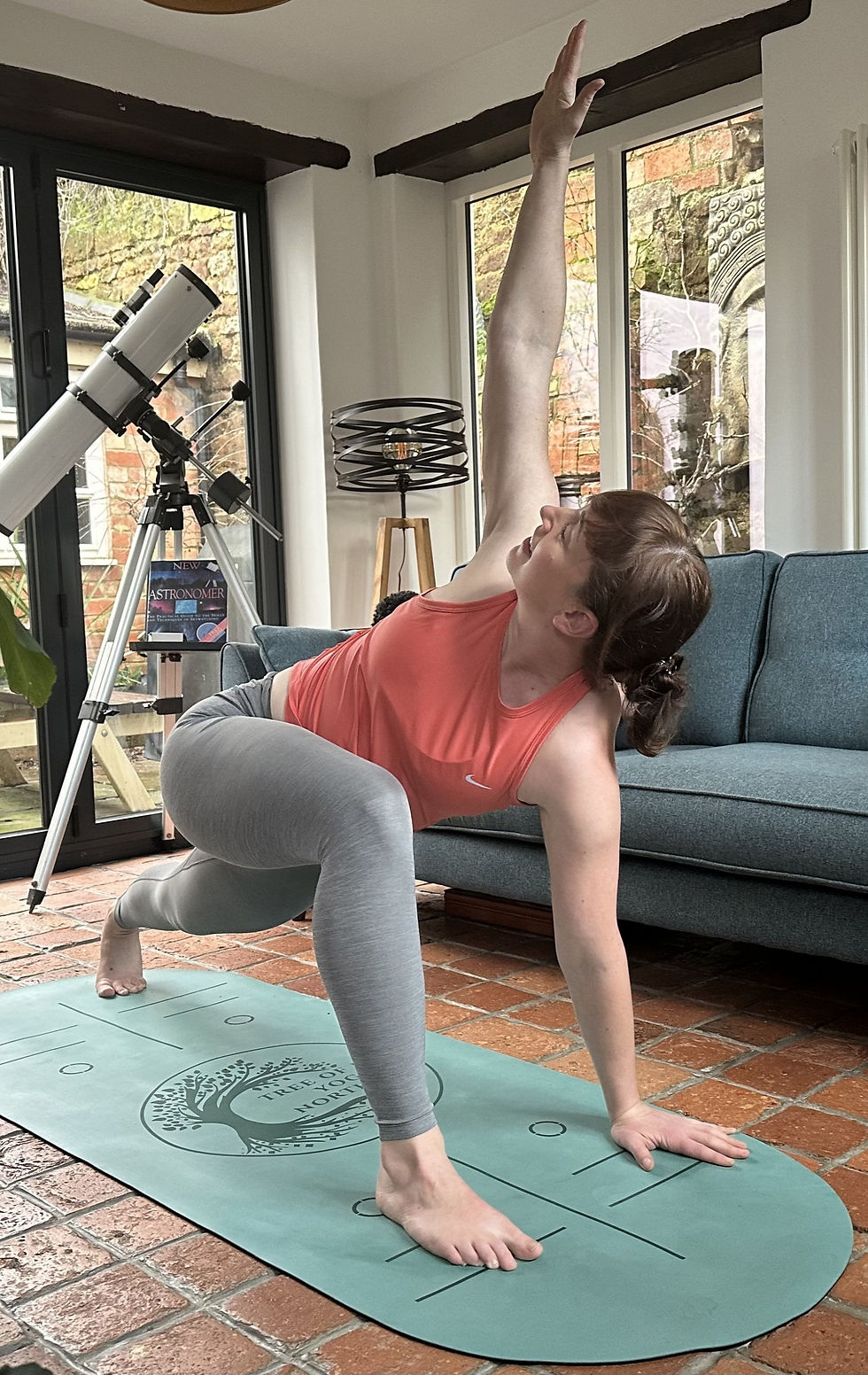
So when we lift the heels in Warrior II, or imagine pressing through the feet in Lizard pose as though doing a gentle calf raise, we’re not just “doing yoga”.
We’re supporting balance, joint health, and long-term mobility.
What Is Pada Bandha?
Pada Bandha is sometimes called the foot lock, but I prefer to think of it as waking the feet up again.
It involves:
spreading the toes
lifting the arches
grounding through three points of the foot
creating gentle activity through the lower legs
When this happens, something remarkable follows.
The inner thighs wake up
the pelvis stabilises
the spine lifts more easily
balance improves
Energy travels upward from the ground.
It’s subtle, but powerful.
Why We’ve Been Working the Toes in Class
Recently we practised:
lifting the toes in standing poses
"sawing" foot actions in Lizard
pressing through the feet as though resisting the floor
strengthening the front of the shin
activating the arches
These actions help restore the natural spring of the foot.
They also reduce the risk of trips and falls over time, which is something that becomes increasingly important as we age.
Strong feet support confident movement.
The Role of the Hands: Hasta Bandha

The same principle exists in the hands.
Hasta Bandha is the hand lock.
You may have noticed recently in Cat–Cow that we flattened the palms more deliberately in Cat, then allowed the fingers to soften slightly in Cow.
That wasn’t accidental.
When we activate the hands well:
pressure reduces in the wrists
the arms lengthen more naturally
the shoulders stabilise
the chest opens more comfortably
And energy begins to travel upward through the arms toward the heart.
Downward Dog becomes lighter
Tabletop becomes stronger
even seated postures become more supported

An Unexpected Sign Something Is Working
One lovely thing I’ve noticed in classes recently is how many people have been yawning.
Quite a lot of yawning!
This is actually a very positive sign.
Yawning is one of the ways the nervous system resets itself. It’s often a signal that the body is shifting from a “doing” mode into a more regulated state.
It’s something I always welcome in class so never suppress!
It means the body is responding.
Why This Work Fits the Season Perfectly
Just after the Spring Equinox, the energy of the year begins to change direction.
Light increases...movement returns...circulation improves...motivation grows.
In traditional yoga language, this is a time when energy naturally starts to rise upward through the body and the feet and hands help support that process.
Small actions at the edges of the body create big changes through the centre.

A Foundation for Everything Else We Do
Bandha work isn’t about effort or holding tension.
It’s about connection.
When the feet and hands become more awake and responsive, everything else in practice becomes easier:
You can tangibly feel balance improves, joints feel safer, movement becomes lighter and
breathing becomes steadier.
It’s one of those normally unnoticed foundations that supports us far beyond the yoga mat.
And it’s something we’ll continue to build gently as the term progresses.


Comments